
















































Not long ago, product design workshops used to boast filament printers as their office centerpiece. The machine’s nozzle would be humming away, slowly tracing shapes on a heated bed. It was enough for rough drafts, but never for the kind of prototypes a business could show to a client with confidence. The story now looks quite different. Resin printers, once considered expensive and niche, are now becoming popular as an ideal choice for detailed prototypes.
This change is not a passing trend. It reflects a deeper shift in what industries expect from prototypes and how quickly they need materialize an idea into the market.
A Finish That Feels Real
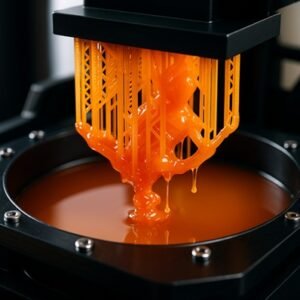
The first and most visible reason is surface quality. Resin printing methods such as SLA and MSLA cure whole surfaces with a light source, not by dragging a nozzle across a plane. The result is layer heights commonly in the 25–50 micron range, which produces finishes much closer to injection-molded parts than to typical filament prints. That difference is not subtle. For products sold by sight and touch, the prototype must look and feel like the final thing. When it does, conversations with clients are different. They stop negotiating about texture and start discussing features.
This is not only qualitative. Comparative studies show SLA and similar photopolymer processes outperform other extrusion methods for fine-detail fidelity.
Precision Where Tolerances Matter
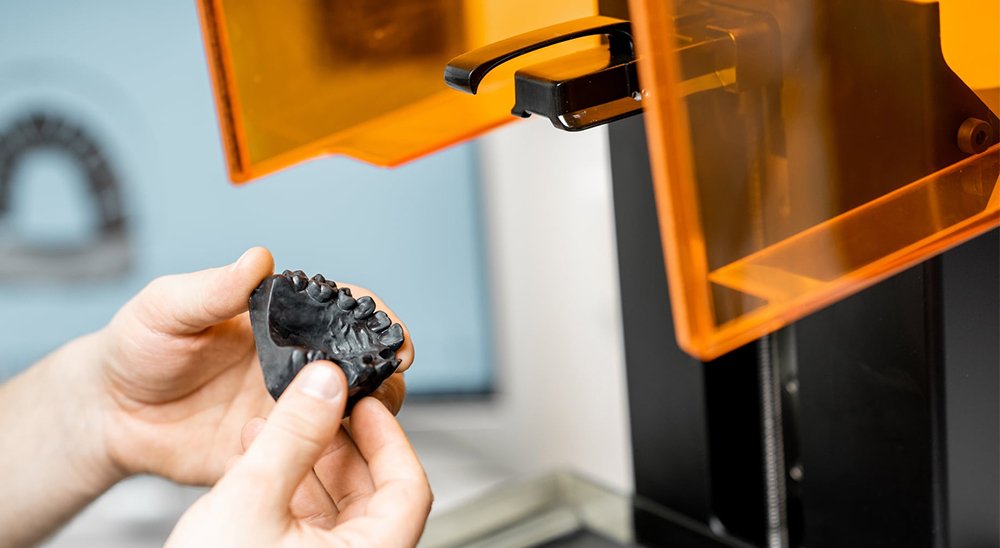
When prototypes need tight tolerances, SLA delivers. Dentistry is the clearest illustration. Dental labs routinely use SLA/DLP printing to make crowns, surgical guides, and aligner models because the process can reliably hit tolerances measured in tens of microns. That is not marketing copy. Peer-reviewed comparisons show SLA and DLP outperform many other consumer-grade processes on dimensional accuracy in dental applications. In practice that means a printed dental model will fit thermoformed aligners or crown seats far more predictably than most FDM parts. If dentists and dental technicians trust these prints for clinical workflows, product teams can confidently use the same process where fit and detail matter.
Material Science Has Changed the Game
Resin materials used to be brittle and for show only. That has changed. Resin manufacturers now publish mechanical datasheets showing tensile strength, elongation, and heat deflection numbers intended to simulate ABS, Nylon, and other engineering plastics. Formlabs’ Tough 2000 family is an explicit example. The company positions it for rugged prototyping, jigs and fixtures, and enclosures where stiffness and impact resistance are required. Companies using such materials report prototypes that survive handling and functional testing previously reserved for FDM or injection molded parts. That opens SLA to a wider set of use cases beyond display models.
Faster Iterations at Smaller Scales
Speed is contextual. For large one-off structural parts, other technologies still win. For small, detailed parts, resin can be faster because entire layers cure at once instead of being traced. Teams that iterate on small assemblies, jewelry, eyewear, or consumer gadgets benefit from overnight batches of variations that are ready for immediate assessment the next morning. For many startups that velocity enables more design cycles per funding round or per sprint, which translates directly into better products sooner.
Adoption Is No Longer a Barrier
Resin hardware has moved down the price curve. A few years ago, high-resolution stereolithography meant only expensive industrial machines. Today, high-quality MSLA and desktop SLA printers are available for a few hundred dollars, and mainstream reviews highlight capable printers well under $300. That pricing has brought SLA into small labs, Maker spaces, and Tier-II city shops, expanding the supplier base for resins, post-processing gear, and service bureaus. The broader market metrics show this is more than anecdotal: the SLA technology market is projected to grow strongly in the coming years, reflecting rising demand in dental, jewelry, and precision prototyping segments.
The Messy Reality and How Firms Adapt
Resin workflows introduce real operational costs. Parts require washing in solvents, UV post-curing, and careful waste handling. Some resins are sensitive to humidity and require temperature control. That adds complexity compared with pulling an FDM print from the bed. For teams that cannot manage the post-processing safely and consistently, SLA can slow things down and create quality variance.
Design firms that succeed with resin do not pretend those steps do not exist. They train staff to handle chemicals safely, they standardize wash and cure stations, and they bake post-processing into their task lists. Once that becomes routine, the time cost diminishes and the benefits dominate.
Where SLA Fits and Where It Doesn’t
Do not fall for the narrative that one technology will replace all others. Each tool serves a different need. Use SLA when finish, fine detail, or tight tolerances matter and you need a prototype that persuades stakeholders. Use FDM for big form studies, functional pieces that need cheaper, tougher polymers, or where large build volume matters. Use SLS for nylon-strength, functional testing, and small-batch end-use parts in engineering workflows. SLA sits squarely in the middle, the zone that moves ideas into decisions.
The Broader Market Picture
The numbers back this up. Industry reports project SLA adoption to grow at nearly twenty percent annually. Filament printing, while still dominant in hobbyist markets, is maturing and slowing down. In India, distributors confirm that resin printers now outsell high-end FDM units in design and jewelry segments.
What this signals is not the death of other technologies but a clear repositioning. Resin is no longer niche. It is mainstream in the segments where detail, finish, and realism are critical.
Prototyping is about persuasion as much as it is about testing. A prototype must convince a client to invest, an investor to fund, or a customer to imagine the product in their hands. Resin printing excels here because it makes the prototype indistinguishable from the final thing.
That is why more workshops keep a resin printer running next to the coffee machine. Not because it replaces every other machine, but because it produces the models that win trust.
The future will likely remain hybrid. FDM for drafts, SLS for stress tests, SLA for persuasion. But in the middle of that triangle, resin is quickly claiming the role of the most important tool on the bench.
The next time you pick up a prototype that feels production-ready, remember this. It probably came out of a resin vat, not a filament nozzle.