














































At the ever-changing manufacturing scene, competitiveness becomes very important-largely for small and medium enterprises. Though usually linked to big corporations, additive manufacturing is ceasing to be an optionality for a Small and Medium-scale Enterprise (SME), as they seek to innovate, streamline and enter into new marketities. This revolutionary technology, however, offers plenty–from faster product development to the massive bottom-line changes for SMEs.
What is 3D Printing for SMEs?
Essentially, these are 3-Dimensional in the shape of an object manufactured from a digital design by the process of layering material one on top of the other. In contradistinction to subtractive manufacturing techniques that involve the removal of extra material from a big block of raw material, 3D printing encourages minimum waste and hence timeliness and ability to accommodate complex geometries hitherto not possible. This implies for SMEs the ultimate flexibility and efficiency at different business stages.
Key Benefits of 3D Printing for SMEs:
Rapid Prototyping and Product Development:
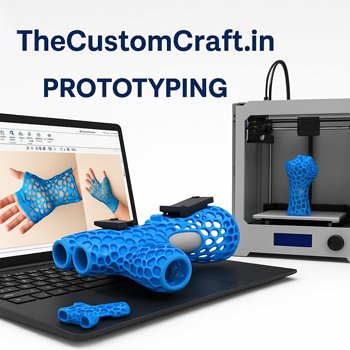
The most important advantage of rapid prototyping by 3D printing for SMEs is that this procedure adapts so well.
- Quick Iteration: Instead of weeks of waiting.One must put into consideration that this prototype presents the manufacturing and analysis to an extent where even few minutes or days of waiting can make a difference. Therefore, only a few hours or days suffices for printing designs by SMEs. This will reduce the product development lifecycle.
- Cost-Efficient Change: A design flaw could be identified and resolved at an early stage to iterate quickly and thus lessen the time and costs involved in making mistakes down the road. For SMEs, this changes the whole innovation game.
- Concept Visualization: 3D printed prototypes may serve as actual models when conducting an internal review, presenting to stakeholders, and even going for early customer feedback to help refine the design before full-scale production.
- Cost and Efficiency:
There are various ways in which 3D-printing cost savings impact an SME directly.
- Tooling Costs: A typical manufacturing process requests a big price for molds and tooling, which acts as a huge impediment to smaller businesses. 3D printing either does away with huge investment cost or does reduce it significantly, thereby allowing SMEs to practice manufacturing on demand.
- Waste of Material: Additive manufacturing uses only the amount of material needed for the part; therefore, it wastes far less than subtractive processes do. This argument goes on to support sustainable manufacturing for SMEs.
- Optimized Supply Chains: Local or in-house production of parts by SMEs reduces shipping costs and lead time and makes them less dependent on faraway suppliers. This, in turn, strengthens the supply chains of those small businesses.
- Customization and Personalization:
In a market that demands being client-dependent, the ability to customize makes a considerable difference.
- Mass Customization: SMEs are able to use 3D printing to offer unique customized products for individual customers at affordable prices. Thus, this acts as a door guard for niche markets for SMEs.
- Personalized Products: SMEs can go from custom medical devices to bespoke consumer products, meeting very specific customer needs and increasing customer satisfaction and loyalty.
- Short Production Runs: Small production runs of highly specialized items are economically feasible for the first time, and SME producers want it.
- On-Demand Manufacturing and Inventory Reduction:
Inventory management has always been averted by SMEs because of associated huge drain on his resources.
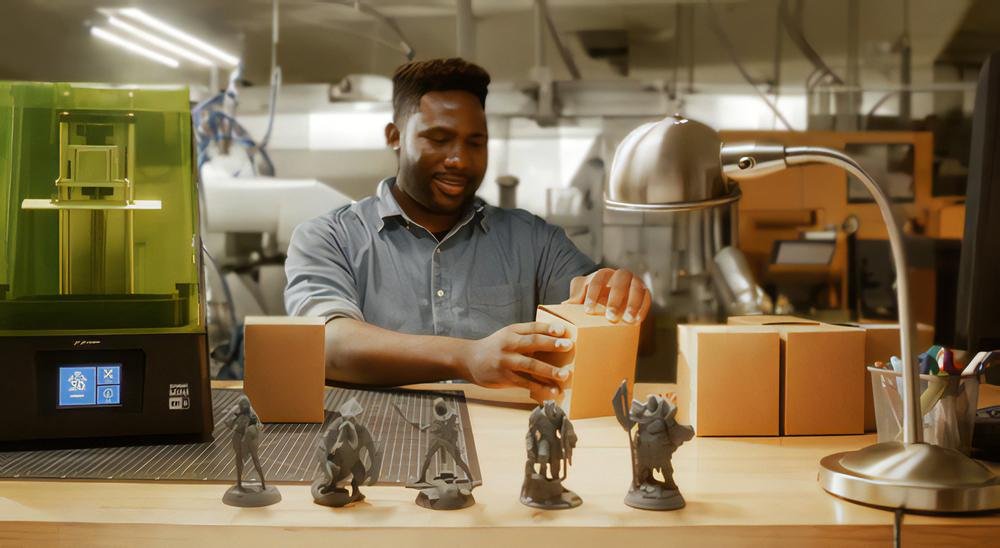
- Print When Needed: 3D printing allows on-demand manufacturing where parts and products are produced only when needed by a customer.
- Reduced Inventory Holding Costs: Lower inventories free up much-needed capital for SMEs, supply storage space, and minimize obsolescence. This is a very important factor in lean manufacturing for SMEs.
- Producing Spare Parts: Instead of carrying spare parts in large quantities, SME’s produce them with 3D printing whenever required, ensuring the seamless conduct of services without heavy inventories. The freedom in design, complexity, and innovation are among the major factors limiting SMEs. 3D printing sets them free.
- Part consolidation: Multiple components that can be designed as a single 3D printed part, which helps speed up assembly, cut down failure points, and reduce overall weight. Therefore, the functionality of the SME product is heightened further.
- Access to New Materials and Applications:
New materials for SMEs via 3D printing are on a constant upgrade and thus open up new possibilities.
- Materials from a wide array: From engineering plastics and resins to metals, composites, and even ceramics, SMEs can select materials best suit for their specific application.
- Functional Prototypes: Unlike visual models, functional prototypes can be manufactured using production-grade materials to be put through their paces, testing all aspects rigorously before being finally manufactured.
- Specialized Applications: Hence, custom jig-and-fixture tooling and end-use parts can be made, thereby increasing the efficiency of SME operations.
Implementing 3D Printing in Your SME:
In face of 3D printing adoption, SMEs should first have clear goals.
- Identify the needs: Which particular pain points does your business want to solve through 3D printing: prototyping, custom parts, lead time reduction?
- Choose appropriate technology: Assess how much value the printer type (FDM, SLA, SLS…) brings in regard to the material it uses, its accuracy, and the bang for your buck.
- Plan training: Your operators need to be well trained in both the 3D design software required for 3D printing and the operation of the printer.
- Think small to grow big: Just one pilot project at a time. Then scale up. Moving into more uses of 3D printing in operations will follow.
Additive Is the Future for SMEs
The way things are done in manufacturing is changing, and 3D printing is no longer just a technology of the far-flung future; it is now very much in the here and now, delivering real benefits to manufacturers who base their competitiveness advantages for SMEs. New dimensions of innovations, efficiency, and responsiveness to markets can be unlocked by embracing this disruptive technology by SMEs, thereby fostering an environment for further growth and success in the modern economy. Do not ever be left behind! Look into how additive manufacturing can turn around your SME today.