









































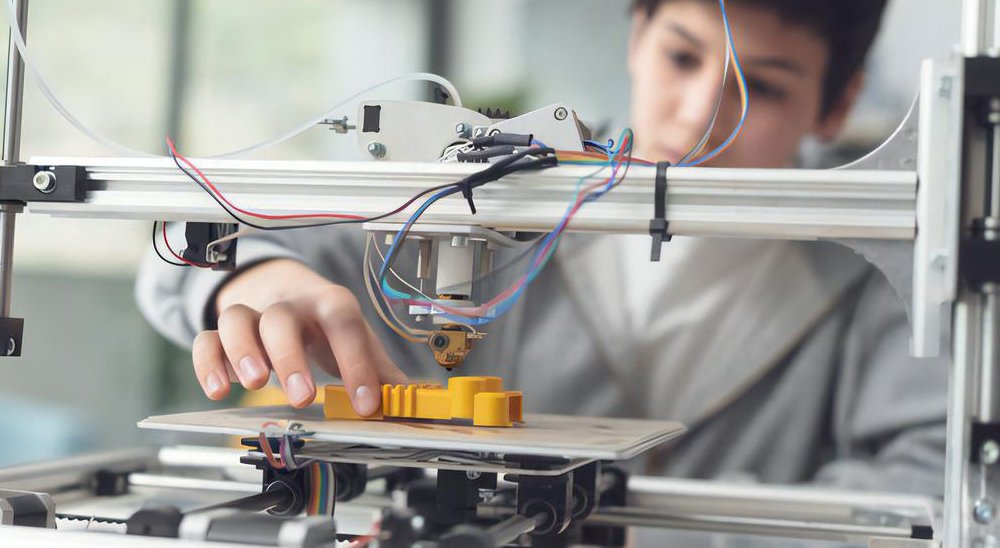
When 3D printing made a quiet introduction to India, it sounded like something out of a Steven Spielberg movie. A machine that “prints” objects? Layers of plastic, metal, or resin fusing together to form a working part? People felt it’s too complicated for our factories and too costly for the market. So, they pushed it into think tanks.
Now in 2025, the hum of 3D printers is no longer confined to engineering labs. It’s in automotive workshops in Pune, dental clinics in Mumbai, even humble jewellery studios in Jaipur. The shift is not subtle anymore. Additive manufacturing is moving from “what if?” to “why not?”
It took the pushes of many trends to move additive manufacturing this far. In this piece, we’ll trace those shifts and see how they’re influencing 3D printing adoption across the country.
From Prototyping to Production
For years, Indian manufacturers kept 3D printing in the “model only” box. It was useful for demos, not for markets. That wall is finally cracking. Prototypes are being pushed into production. Auto suppliers are already rolling out short runs of spare parts. Aerospace startups are testing lightweight alloys that shave off weight and cost. Even consumer electronics brands are putting out small batches straight from the printer.
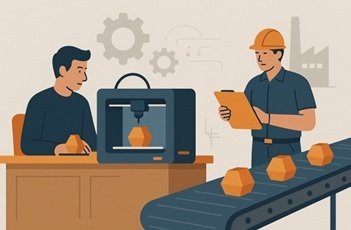
For example, Agnikul Cosmos in Chennai. This aerospace company didn’t just tinker with 3D-printed engines for show. They built and fired a single-piece rocket engine out of Inconel, no welds, no joints, the same engine meant to fly. That’s not a model on a lab shelf, that’s production-grade hardware.
And the real kicker is speed. A factory that once waited three months for a mould from Germany can now print the part in three weeks. Inventory problems have shrunk, and costs have crashed. The same machine once dismissed as a “fancy toy” has quietly become the backbone of production.
Healthcare and Bioprinting: A Quiet Revolution
You don’t usually connect hospitals with high-tech printers. But in 2025, bioprinting has already found its way into Indian healthcare. Dental crowns, surgical guides, orthopaedic implants, all of that is normal now. The louder talk is around skin grafts and tissue models coming out of research labs.
The change is real. Think of a patient in Hyderabad who doesn’t need to wait half a year for an imported hip implant. Instead, they get a 3D-printed one, built for their body, ready in a few weeks, and at nearly half the price. That’s a different reality.
The global 3D bioprinting market was around $1.3 billion in 2022. If the estimates are right, it could touch $8.6 billion by 2032. That’s not a small jump, that’s a whole new industry taking shape. Back in December 2022, IISc Bengaluru set up India’s first 3D bioprinting Centre of Excellence with Swedish player CELLINK. Their research isn’t staying at surface level either. They’re digging into heart tissue, bone, cartilage, even cancer. This is not hobbyist printing, this is the heavy stuff.
It’s not just innovation. It’s access. And in a country where affordability often decides survival, that matters more than the hype.
Sustainable Materials: Printing Green into Growth
Sustainability in India often reads like a buzzword until you see it up close. A packaging startup in Delhi is already swapping petroleum-based filaments for corn-starch plastics. A design studio in Ahmedabad is playing around with composites made from recycled wood dust. Even factory waste is looping back in as raw material.
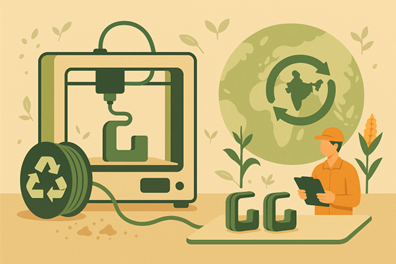
Take Bengaluru’s Jayaashree Industries, the same team that built low-cost sanitary machines, now working with recycled plastics for 3D printing filaments. What looks like trash in one context is turning into production feedstock in another. It’s not idealism, it’s business.
And that’s the point. This isn’t only about saving the planet, though it does that too. It’s about market access. Global buyers now want cleaner supply chains. Companies that show ESG-friendly production land contracts faster. For Indian firms chasing export markets, 3D printing with greener materials isn’t a token move. It’s a passport.
AI + 3D Printing: Smarter Before the Print
The truth about 3D printing is simple. It’s not magic. If the design is wrong, the printer will still happily print that mistake, and you lose material, time, and money. That’s where AI has begun to change the game. By 2025, AI software has quietly turned into the design assistant for small manufacturers.
Instead of burning weeks on trial and error, AI simulations now flag where a part might crack, where it’s too bulky, where the geometry can be improved. You don’t need a consultant army for this. The software does the heavy lifting.
Case in point, Bengaluru’s Supercraft3D prints medical models and implants. But before a single layer is laid, they have AI check the design against patient scans, making sure the fit and stress points are right. The result is less wasted resin and more reliable implants.
It’s the same for a number of small auto-parts shops in Pune. The software runs checks, cleans up the design, and only then does the printer start its hum. Less guesswork. More confidence. For SMEs, that’s the thin line between just experimenting and actually competing.
Distributed Manufacturing: From Metros to Tier-II Towns
Supply chains in India have always been fragile. A part stuck in transit between Mumbai and Guwahati can stall an entire factory line. Networks of small local distributed manufacturing hubs are changing that equation. Tier-II and Tier-III cities are setting up their own 3D printing centres, ready to print spare parts, education kits, or consumer tools on demand.
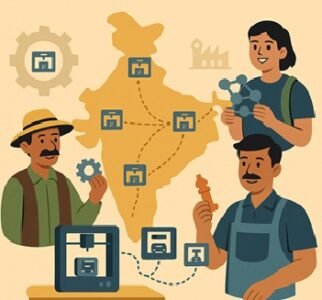
Think of it this way, a farmer in Nashik breaks a machine part. Instead of waiting weeks for a replacement, a local hub prints it in days. A school in Jaipur needs new science kits and they’re printed locally instead of imported. This model doesn’t just cut delays, it puts smaller towns directly into India’s growth map.
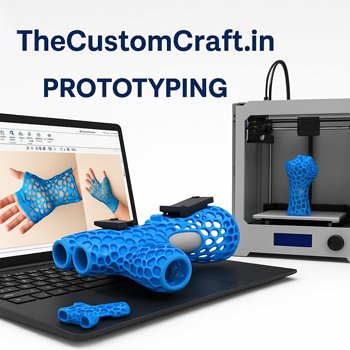
The story of 3D printing in India is no longer written in labs. It’s unfolding in factories, clinics, and classrooms. So, stop worrying about if 3D printing is a fad and get your idea printed today at The Custom Craft.